


Genuine Parts, Exact Engineering.
Every BMW is a complex ecosystem of interconnected mechanical and electronic systems designed to operate within incredibly tight tolerances. When a vehicle like the 2026 BMW X5 leaves the factory, it does so with components specifically engineered for its 3.0L I6 or 4.4L V8 powerplants. These Original Equipment Manufacturer (OEM) parts are the only components guaranteed to meet the exact specifications used during the vehicle's assembly. Unlike aftermarket alternatives, which are often designed to fit a broad range of models from different manufacturers to reduce production costs, genuine BMW parts are model-specific. This ensures that a replacement water pump or alternator provides the exact flow rate or electrical output required by your specific engine.
The sophisticated nature of modern BMW engineering means that even minor deviations in part dimensions or material quality can lead to significant performance drops. For professional commuters in Choctaw who rely on their vehicles for daily trips into Oklahoma City, maintaining this factory-standard performance is vital for long-term reliability. A genuine BMW brake rotor, for example, is composed of a specific high-carbon steel alloy designed to dissipate heat at a rate that matches the factory-installed M Sport Brakes with Blue Calipers. If you are performing your own maintenance or need a professional repair, sourcing the correct components from our BMW parts department ensures you are not compromising the vehicle's structural or mechanical integrity.
Precision is not merely about fitment; it is about the integration of technology. Components such as oxygen sensors or fuel injectors must communicate perfectly with the engine management software to maintain the 23 city / 27 hwy efficiency ratings found in the 40i trim. If you have questions about which technical specifications are required for your model, you can reach our team at (405) 755-3600 for expert guidance. Our facility is conveniently located for local owners, and you can find directions to our Edmond showroom to speak with a specialist in person.

Long-Term Durability and Wear Characteristics of Factory Components
While an aftermarket part might appear identical to an OEM component on a service bench, the difference in material science often reveals itself over thousands of miles of suburban driving. Genuine BMW parts are subjected to rigorous stress testing that simulates years of operation in varied climates. This is particularly relevant for residents in Mustang, where family-oriented driving patterns often involve frequent stop-and-go trips near Mustang City Park. These conditions place higher thermal stress on cooling systems and braking components. Factory-approved parts, such as the genuine oil filters and synthetic lubricants used in our BMW service department, are formulated to maintain their viscosity and filtration efficiency throughout the entire recommended service interval.
Warranty You Can Count On
Durability is also a core component of the BMW ownership experience, supported by comprehensive warranty protections. Original BMW parts purchased and installed at an authorized center typically carry a 2-year/unlimited miles limited warranty, covering both the part and the labor.
This stands in contrast to many aftermarket brands that may only offer limited coverage or no labor reimbursement if a part fails prematurely. This manufacturer backing is why we utilize factory components for all our BMW executive demo vehicles, ensuring they remain in peak condition for their next owners.
Precision in Every Component
Beyond standard mechanical parts, wear-and-tear items like wiper blades and cabin air filters are designed to interact perfectly with the vehicle's existing hardware. For example, BMW-approved tires and wheels, such as the 21" M Light Alloy V-spoke Bi-color Wheels, are balanced to work with the specific suspension geometry of your vehicle to prevent premature bushing wear.
To help our customers maintain these high standards, we frequently offer new vehicle service specials that make it easier to choose factory-correct maintenance. Should you encounter an unexpected issue on the road, remember that your vehicle is supported by BMW Roadside Assistance: 1-800-332-4269, which provides manufacturer-backed support 24 hours a day.
Safeguarding Your Investment: Resale Value and Warranty Protections
Protect Your Market Value
Maintaining a detailed service history that reflects the use of genuine parts is one of the most effective ways to preserve the resale value of a luxury vehicle. When it comes time to trade in or sell a model like the 2026 BMW X5, savvy buyers and appraisers look for evidence of consistent, high-quality care. A vehicle repaired with aftermarket components may be viewed as having a "thin" service history, potentially lowering its market value. By contrast, using documented OEM parts helps keep the vehicle closer to its original factory condition, which is a key requirement for vehicles entering the Certified Pre-Owned program.
Keep Your Coverage Intact
Warranty integrity is another critical factor in the OEM versus aftermarket debate. While the Magnuson-Moss Warranty Act prevents a manufacturer from voiding a warranty simply because an aftermarket part was used, it does allow for the denial of a claim if that specific part caused a failure in a covered system. For instance, if an unapproved aftermarket coolant hose bursts and causes the engine to overheat, the resulting repairs to the powertrain 4 years / 50,000 miles system might not be covered. Sticking with factory parts ensures that your basic 4 years / 50,000 miles coverage remains robust and unchallenged.
12-Year Body Protection
Furthermore, BMW provides a specialized 12-year Unlimited Mileage Rust Perforation Limited Warranty that relies on the integrity of the original body panels and specialized coatings. Using non-OEM body parts after a collision can compromise this protection. To help you manage the costs of premium care, we provide various BMW service specials throughout the year.
 2026 BMW X5 · Certified Pre-Owned Standards & OEM Protection
If you are considering upgrading to a newer model, you can explore our current BMW X5 inventory to see how the latest engineering standards continue to set the bar for the luxury SUV segment. We also provide various BMW service specials throughout the year to help you manage the costs of premium care.
The True Financial Equation: Upfront Cost Versus Lifetime Value
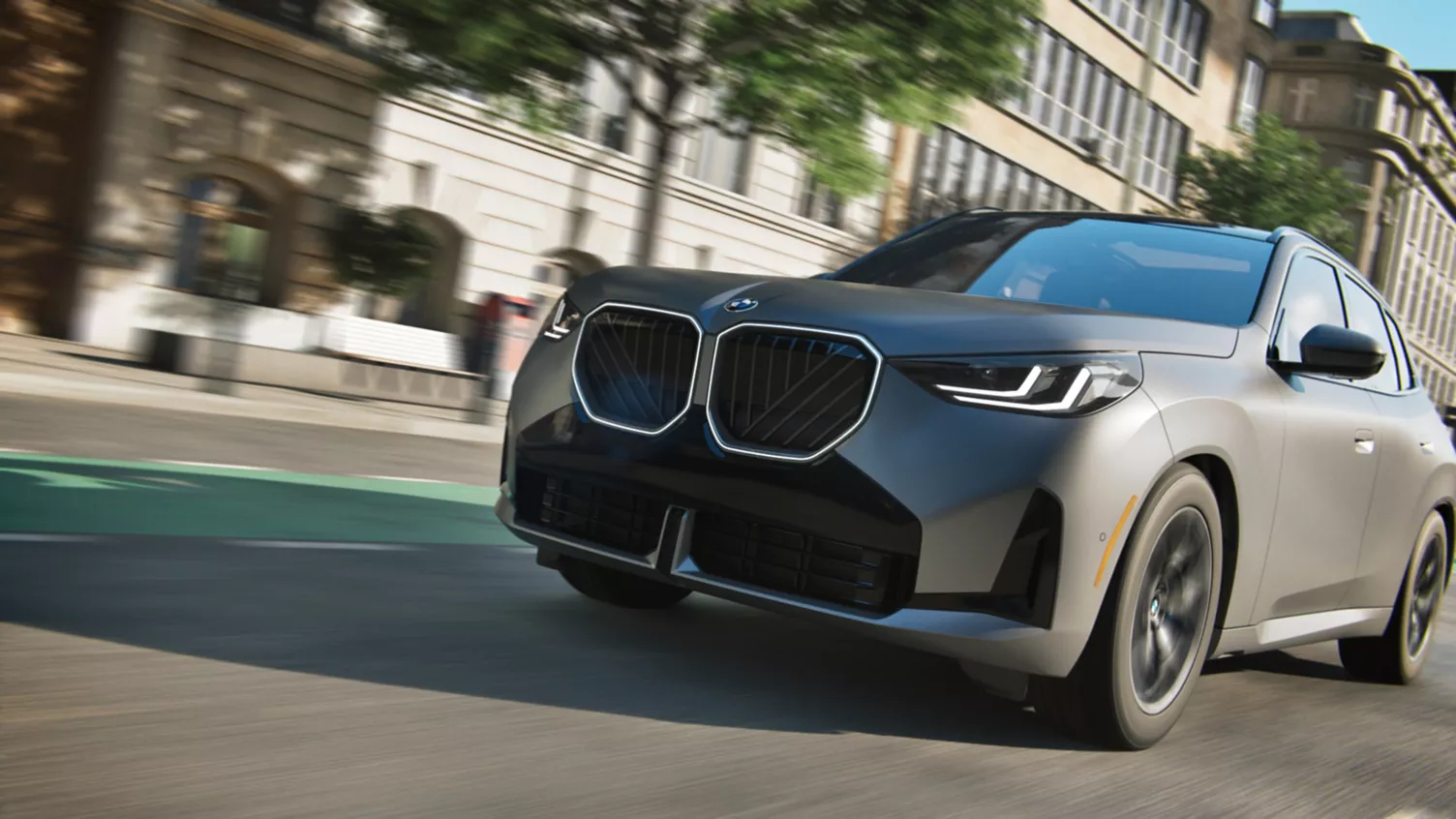 BMW 330i · M340i · X4 — Factory Parts, Lifetime Value
The initial price tag of an aftermarket part is often lower than its genuine counterpart, but this "savings" frequently disappears when calculating the total cost of ownership. Aftermarket manufacturers often save money by using lower-grade plastics, less durable rubber compounds, or broader fitment tolerances. In practice, this can lead to a shorter lifespan for the part, requiring you to pay for labor twice when the component fails early. When you choose factory parts for our new BMW sedans, you are investing in a component that has been optimized for that specific chassis and weight distribution.
 OEM vs Aftermarket · Total Cost of Ownership
Consider the example of a simple engine air filter. A genuine BMW filter is designed with a specific pleat count and surface area to allow the 2.0L I4 engine in a 330i to breathe optimally while maintaining strict filtration standards. An aftermarket filter with a different flow rate can cause the engine to work harder, slightly reducing fuel economy and potentially leading to carbon buildup over time. Over the course of a year, the extra fuel costs can easily exceed the price difference between the two filters. This principle applies even more strictly to high-performance models like the M340i, where every component is tuned for maximum output.
The peace of mind provided by the BMW parts warranty also carries a tangible financial value. If a genuine part fails within the two-year coverage period, the cost of the replacement and the professional labor to install it are covered at any authorized BMW center. This protection is not standard in the aftermarket world, where you are often left responsible for the labor costs even if the part manufacturer provides a replacement component. For those driving the sleek BMW X4, maintaining the vehicle with factory-approved components is the most predictable way to manage long-term maintenance expenses without the risk of "budget" parts causing expensive secondary damage.
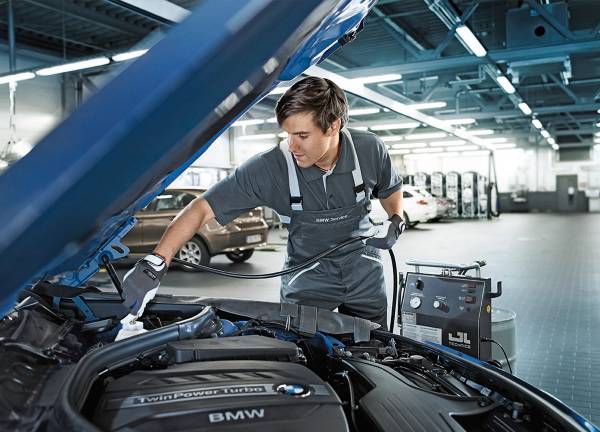 BMW X4 · Authorized Center Warranty Coverage
Precision Calibration and Diagnostic Compatibility with Factory Systems
Software-Precise Components
Modern BMW vehicles are essentially high-performance computers on wheels, utilizing the BMW iDrive system to manage everything from climate control to advanced safety features. Many mechanical parts now include integrated sensors that must communicate with the vehicle's central processing units. Aftermarket electronic components often use "universal" software protocols that can introduce "noise" or incorrect signals into the vehicle's network. This can complicate diagnostics with factory scan tools, leading to longer labor times as technicians struggle to identify whether a fault code is caused by a system failure or simply a non-communicative aftermarket sensor.
Sensors That See Exactly Right
This compatibility is especially vital for the active safety systems found in our new BMW SUVs. Features like blind spot detection and lane departure warning rely on precisely calibrated cameras and radar sensors. If a windshield is replaced with non-OEM glass, the optical clarity may differ slightly, potentially requiring extensive recalibration or even causing the safety systems to malfunction. Using genuine BMW glass ensures the sensors "see" exactly what they were programmed to see, maintaining the TOP SAFETY PICK+ standards of the vehicle.

Predictable by Design
Even for our pre-owned vehicle specials, we prioritize models that have been maintained with factory-correct components to ensure all digital integrations remain seamless. Whether it is a software-dependent component or a mechanical part like the Adaptive M Suspension, OEM parts behave exactly as the factory software expects. This predictable behavior is why we recommend genuine parts for the flagship BMW X7, where the complexity of the onboard systems demands absolute precision to ensure every feature, from the ambient lighting to the driver assistance technology, functions without interruption.
Ready for Absolute Precision?
From iDrive-integrated sensors to Adaptive M Suspension components, our parts and service team ensures every genuine BMW part is installed and calibrated to factory specification. Explore our BMW X7 inventory or browse our pre-owned specials — all maintained with the factory-correct components your vehicle demands.
Common Questions About Maintaining Your BMW with Factory Parts
What is the primary difference between BMW OEM and aftermarket parts?
OEM parts are produced by the same manufacturers that supplied the original components for your vehicle's assembly, ensuring identical fit and performance. Aftermarket parts are third-party components designed to fit multiple vehicle types, which often results in compromises regarding material quality and precise tolerances. Choosing OEM ensures that your vehicle continues to operate exactly as the engineers intended.
Will using aftermarket parts void my BMW New Vehicle Limited Warranty?
Using an aftermarket part does not automatically void your entire warranty, but it can lead to denied claims if that part causes a failure in a covered system. For example, if an aftermarket oil filter collapses and causes engine damage, the repair would likely not be covered under the powertrain 4 years / 50,000 miles warranty. Utilizing genuine parts is the safest way to ensure your coverage remains fully intact.
Do genuine BMW parts really last longer than aftermarket equivalents?
Generally, yes, because they are manufactured to the same durability standards as the parts originally installed on the assembly line. BMW OEM parts are tested for longevity in extreme conditions, whereas aftermarket parts are often built to a lower price point using less resilient materials. This higher durability often results in a lower total cost of ownership over the life of the vehicle.
Can aftermarket parts interfere with my BMW's electronic diagnostics?
Non-OEM electronic components can frequently send unexpected signals to the vehicle's computer, which may trigger "phantom" fault codes or hide actual issues. This makes it much more difficult for technicians using factory scan tools to accurately diagnose problems. Genuine parts are designed to be fully compatible with the vehicle's software and diagnostic protocols.
Does self-installing OEM parts affect my warranty coverage?
While the 2-year/unlimited miles limited warranty typically covers the part itself regardless of who installs it, the labor coverage is usually only included if the part is installed by an authorized BMW center. If a self-installed part fails, you may be responsible for the labor costs associated with the replacement. We recommend professional installation to ensure the part is calibrated correctly to your vehicle's systems.
Professional Care for Edmond Drivers
Choosing the right parts is an essential aspect of luxury vehicle ownership, ensuring that the performance and safety of your BMW are never compromised. Our team is dedicated to providing the expert care and high-quality components your vehicle deserves, helping you stay on the road with total confidence. Whether you are maintaining a high-mileage sedan or the latest BMW X3 SRPs, we have the resources to keep your vehicle running at its peak.
If you have questions about a specific repair or would like to order components for your next project, please give us a quick call or visit our specialists in person. We invite you to experience our premium service and see why so many drivers in the community trust us with their maintenance needs. You can easily find our Edmond service center right off the Broadway Extension, where our certified technicians are ready to assist you with everything from routine oil changes to complex system calibrations.